Engineered Wood Floor Fitter Essex — What You Should Know Before You Book
Engineered Wood Floor Fitter Essex — What You Should Know Before You Book
Engineered wood is one of those floors that makes you stop in the doorway when it's done. Real wood grain underfoot, solid feel, and it works in rooms where solid wood would warp within a year. I've been fitting it across Essex since before most current flooring trends existed — and there are still things homeowners get wrong every time they book the wrong fitter.
Here's what actually matters.
What Makes Engineered Wood Different
Engineered wood has a genuine hardwood top layer — typically 3–6mm of real oak, walnut, or ash — bonded to a core of cross-ply plywood. That layered construction is what makes it dimensionally stable: it doesn't expand and contract with temperature and humidity changes the way solid wood does.
For Essex homes, this matters. We get cold winters, warm summers, and the kind of variable indoor humidity that plays havoc with solid wood in older properties. Engineered wood handles it far better.
The top layer is real wood, so it can be sanded and refinished — usually two or three times over its lifespan. Cheaper engineered boards have thinner top layers (sometimes 2mm or less), which limits how many times you can sand them. Worth checking before you buy.
What Fitting Actually Involves
There's a reason fitting engineered wood costs more than laminate — there are more ways to get it wrong.
Subfloor prep first. Before a single board goes down, the subfloor needs to be flat (within 3mm over 1.8m/6ft), dry, and structurally sound. On concrete, that means checking moisture levels with a hygrometer — readings above 75% RH need dealing with before the boards arrive. On timber joists, it means walking every board, fixing any squeaks or movement, and planing any high spots.
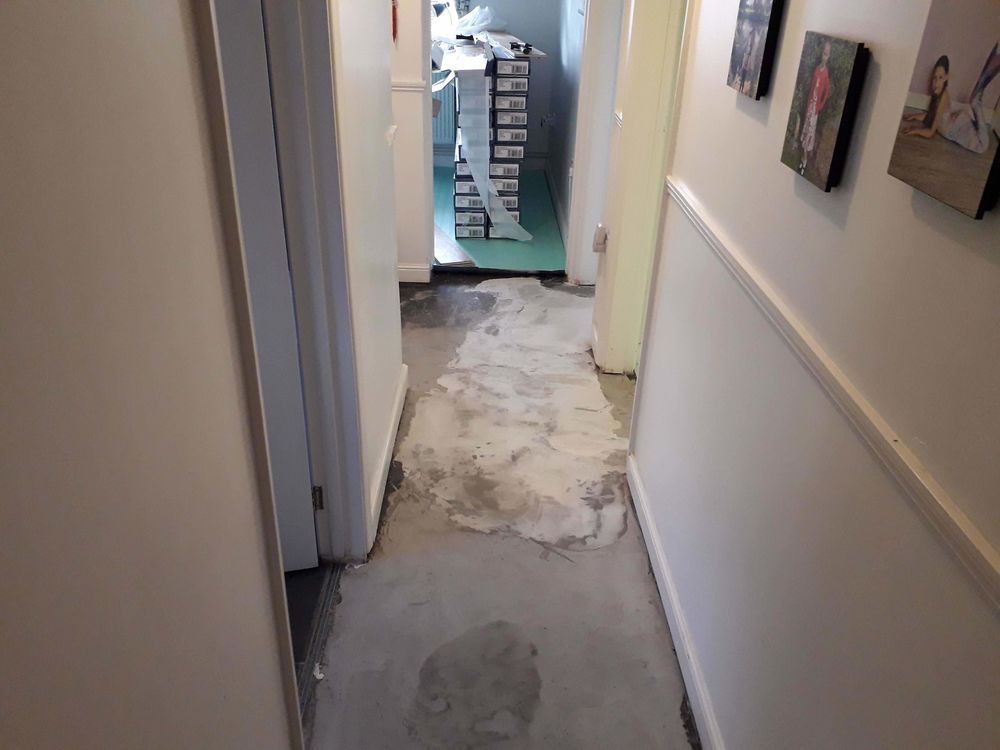
I've turned up to jobs where the customer has already bought their boards and stacked them in the room — only to find the subfloor needs two days of work before we can even think about laying. That's not unusual. It's why a good fitter surveys the floor before quoting, not after.
Acclimatisation. Engineered wood needs 48–72 hours in the room where it'll be laid. Stacked loosely so air can get around the boards. This lets them adjust to the room's temperature and humidity before fitting. Skip it, and the boards can shift after installation — gaps in winter, buckling in summer.
Laying method. Engineered wood can be:
- Glued down — directly to concrete, ideal for underfloor heating, very solid underfoot
- Nailed/stapled — to timber subfloors, fast and traditional
- Floating — boards click together and float over underlay, easier to lift later
Which method suits depends on your subfloor, heating setup, and how the room is used. A floating floor makes sense in a room you might reconfigure; a glued-down floor is better for underfloor heating and heavy-traffic areas.
Cutting in and finishing. The last 15% of the job — cutting around doorframes, fitting thresholds, scribing edges against irregular walls — is where you can really see the difference between a careful fitter and one who's rushing to get to the next job. Those bits matter.
Essex Homes and Engineered Wood
I fit floors across Essex — Chelmsford, Basildon, Brentwood, Maldon, Billericay, Rayleigh, and the villages in between. The challenges vary by property type:
Victorian and Edwardian terraces (common in Chelmsford, Basildon, Maldon) usually have suspended timber floors — original floorboards over joists. These can be bouncy and uneven, sometimes with gaps between boards. Engineered wood can go over them, but they need assessing properly first.
Post-war semis and bungalows often have concrete ground floors that may have had no damp-proof membrane, or an old one that's past its best. Moisture readings are essential before any wood floor goes down.
New builds (common around South Woodham Ferrers, Wickford, Hullbridge) typically have level concrete with underfloor heating. Engineered wood works well here — glued down and checking the heating protocol.
If you're not sure which category your home falls into, that's fine — I'll check when I look at the job.
What to Ask Any Fitter Before You Book
I'd say this even if I weren't the fitter: ask these questions before handing over a deposit.
- Will you check the subfloor before fitting starts, or after I've bought the floor?
- How do you handle moisture on a concrete subfloor?
- Do I need to acclimatise the boards, and for how long?
- What method will you use to lay it — glued, nailed, or floating?
- How do you finish around doorframes and thresholds?
A fitter who can answer those clearly and without hesitation knows what they're doing. One who looks vague or defensive is worth thinking twice about.
For anything you want to work out in advance — room size, floor area, rough material quantities — the flooring cost calculator at How Much Do I Need is a useful starting point. And if you want to check how to measure your room before ordering boards, this guide walks through it properly.
Why Experience Matters with Engineered Wood
Engineered wood isn't forgiving of shortcuts. A subfloor that's slightly too wet, boards that haven't acclimatised, cuts that aren't quite tight — all of it shows. And unlike carpet, you can't just lift a section and redo it without it being obvious.
I've been fitting floors across Essex for over 40 years. I've seen what goes wrong when the prep isn't done, and I've sorted out other fitters' mistakes often enough to know that a cheap quote sometimes becomes an expensive lesson.
If you're looking for an engineered wood floor fitter in Essex, I cover the whole county — whether you're in Chelmsford, Brentwood, Basildon, Maldon, Rayleigh or anywhere in between. Have a look at my Chelmsford floor fitting page if that's where you are.
WhatsApp me at https://wa.me/447966350111 with a rough idea of room size and floor type. I'll come out, look at the subfloor, and give you a straight answer on what it'll take.
No fluff. Just a proper job.
Frequently asked questions
How long does engineered wood floor fitting take?
A typical room of 15–20m² (around 160–215 sq ft) takes a day to fit, once the subfloor is prepped and the boards have acclimatised. Larger open-plan spaces or awkward layouts take longer. I always allow a full day rather than rush it — engineered wood deserves that.
Does engineered wood need to acclimatise before fitting?
Yes, always. Most manufacturers recommend 48–72 hours in the room where it'll be laid, stacked loosely so air can circulate. Skip this and the boards can expand or contract after fitting, causing gaps or buckling. It's one of those steps people skip to save time and regret later.
Can engineered wood be fitted over underfloor heating?
Most engineered boards can, but you need to check the manufacturer's maximum surface temperature — usually 27°C — and ensure the heating is run in gradually after fitting. Not all fitters understand UFH protocol, so it's worth asking before you book anyone.
What subfloor is needed for engineered wood in Essex?
Essex homes vary enormously — Victorian terraces in Chelmsford or Basildon often have old floorboards; newer builds tend to have concrete screed. Engineered wood can go over both, but the subfloor must be flat, dry and solid. Any movement or moisture problem will show up in the finished floor within months.
Is engineered wood better than solid wood for Essex homes?
In most cases, yes. Essex has a reasonably humid climate and homes that switch between warm and cool seasons. Engineered wood is dimensionally more stable than solid — it has a real wood top layer bonded to cross-ply layers that resist the movement solid wood can suffer. You get the look and feel of real wood with fewer headaches.
Want a hand with your floors?
Message Graham on WhatsApp with a few details about your rooms and what you’re after.
More flooring guides
LVT Flooring Fitter Chelmsford — What You're Actually Getting When You Book a Proper Job
Thinking about LVT in your Chelmsford home? Here's what fitting it properly actually involves — and why it matters more than you think.
CarpetCarpet Fitter Near Me, Essex — How to Find One Who Actually Knows What They're Doing
Graham Holmes, Essex carpet fitter since 1982, explains what separates a decent carpet fitter from a shoddy one — and how to find the right person for your home.
Costs & BuyingCarpet Fitting Cost Billericay: What to Budget in 2025
Wondering what carpet fitting actually costs in Billericay? Here's an honest, no-flannel breakdown from a fitter who's been doing this since 1982.