Herringbone Floor Fitter Maldon CM9 — Is Your Home Ready for It?
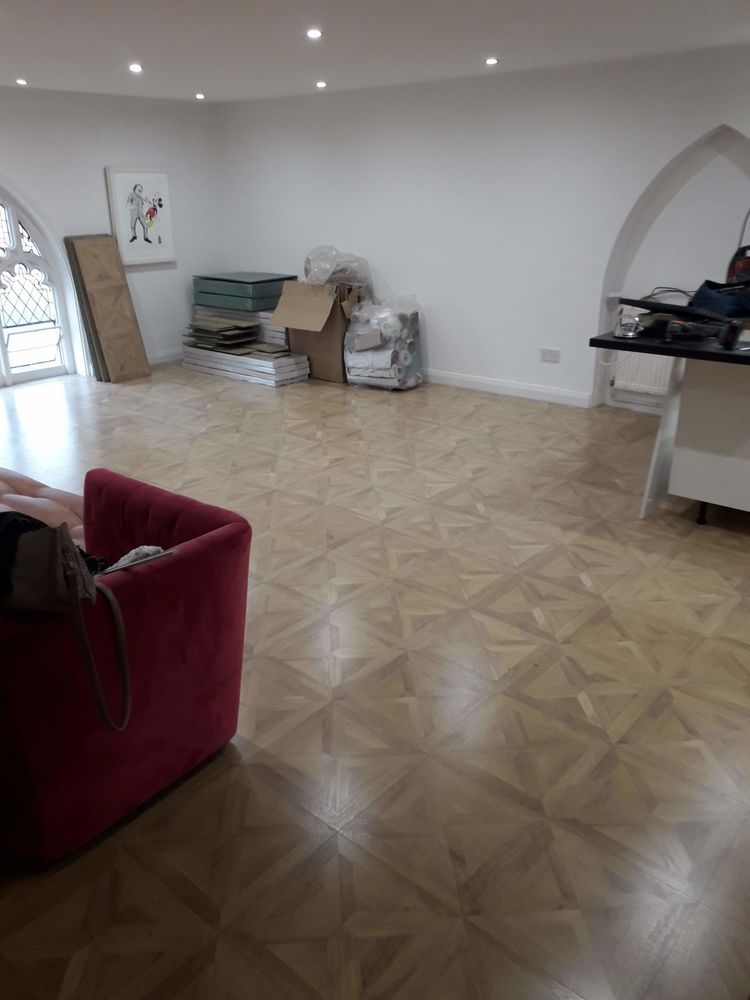
Herringbone Floor Fitter Maldon CM9 — Is Your Home Ready for It?
Maldon is a town that suits herringbone. The High Street has buildings that go back centuries, the Hythe has warehouses that have seen more history than most, and if you live in the CM9 postcode and you're thinking about a herringbone floor — LVT, parquet tile, or engineered oak — chances are the bones of your home are exactly right for it. It's the execution that catches people out.
I'm Graham Holmes, and I've been fitting floors across Essex since 1982. Herringbone is one of my favourite patterns to lay. It also demands more care, more time, and a better-prepared subfloor than most homeowners expect. Let me explain what you're actually getting into.
Why Maldon Homes and Herringbone Go Together
Maldon has three distinct housing eras, and each brings its own challenges.
Victorian and Edwardian terraces — the ones running off the High Street and around Market Hill — tend to have suspended timber floorboards over joists. Lovely old bones, but they flex. You cannot lay rigid engineered oak in a herringbone pattern on a bouncy floor without prep. LVT herringbone, floated over a quality underlay, handles movement well and is often the right call in Maldon's older streets.
Inter-war and post-war semis — widespread from Maldon out towards Heybridge and Burnham-on-Crouch — typically have solid concrete or clinker-block slabs. These carry wood or LVT herringbone well, but they're rarely perfectly flat. I've walked into more than a few Maldon living rooms where the slab has a 12mm dip across 4 metres. A herringbone pattern amplifies any unevenness — the angled joints catch the eye and make every hollow visible.
1970s–90s builds on the edges of town are generally concrete slabs to a reasonable standard, but fifty-year-old screeds have often moved. Same principle: check the floor before you decide on the pattern.
What Herringbone Actually Involves
The pattern itself is straightforward: planks or tiles laid at 45 degrees, alternating left and right. The complexity is in the setting out and the cut waste.
I dry-lay the first few rows from the centre of the room before a single adhesive goes down or an underlay gets rolled out. This tells me where the cut pieces land at the skirting — a satisfying sliver or an awkward offcut that looks rushed. A good herringbone job takes the time to plan before it starts.
As a herringbone floor fitter serving Maldon and across the county via Essex floor fitting, I offer both LVT herringbone (floating or glued-down) and engineered oak herringbone (glued to a prepared concrete or ply subfloor). The choice depends on your subfloor, your budget, and whether you want something you can sand down in twenty years.
LVT Herringbone vs Engineered Oak Herringbone
LVT herringbone is the practical workhorse. Fully waterproof, softer underfoot than wood, and it tolerates mild subfloor imperfections better than engineered oak. I'd point a Maldon homeowner towards it for underfloor heating, pets, children, or a kitchen-diner that flows through the whole ground floor.
Engineered oak herringbone is the real thing — proper wood grain, and it can be lightly sanded if needed. It requires a very flat, very dry subfloor, and it's glued down rather than floated. In a Maldon Victorian terrace, I'd typically need to overlay floorboards with 18mm structural ply first, screwed at close centres, to eliminate movement. That prep takes time but makes the floor last.
Both look exceptional. The question is always the subfloor first, the look second. If you're curious about rough cost, this flooring cost calculator gives you a working figure before we speak.
The Subfloor Conversation
I keep coming back to it because it matters more than anything else. A herringbone floor is only as good as what's underneath it.
Before laying anything in a Maldon home, I check:
- Levelness — no more than 3mm variation over 1.8 metres. Herringbone highlights dips.
- Moisture — old concrete slabs near Maldon's Blackwater waterfront can carry higher readings than you'd expect.
- Movement — timber floorboards that bounce will crack adhesive bonds or cause a floating floor to peak at the joints.
If the subfloor isn't ready, we make it ready. You can read more about what subfloor prep involves — the principles are the same whether you're fitting LVT or engineered oak herringbone.
I've laid herringbone in Heybridge, Goldhanger, out through Woodham Ferrers (CM3), and down past Cold Norton. Similar period housing stock, similar challenges, same fundamentals.
What a Herringbone Fitting Job Looks Like
A typical single-room job — a Maldon living room of around 4m x 5m — takes one to one-and-a-half days, including prep. If I'm overlaying ply on a timber floor, or levelling a concrete slab beforehand, add another half to full day.
I work from the centre out, keeping the pattern square with a chalk line and a laser level. Perimeter cuts get scribed if the walls are out of parallel — which in a Victorian terrace they usually are. Expansion gaps are masked by beading or tucked under the skirting as the manufacturer requires.
If you want to measure the room yourself first, how to measure a room for flooring walks you through it properly.
FAQs — Herringbone Floors in Maldon
Can I have herringbone on my Victorian terrace in Maldon? Yes, but almost certainly with prep first. Suspended timber floors flex too much for glued-down engineered oak without a ply overlay. LVT herringbone floated over good underlay is often cleaner, quicker, and still looks the part.
Is LVT herringbone suitable for a kitchen or open-plan space? Absolutely. LVT is fully waterproof throughout a ground-floor kitchen-diner. The herringbone pattern works particularly well in elongated open-plan rooms — the diagonal draws the eye along the space.
How long does herringbone installation take? For a standard living room of around 20m², expect one to one-and-a-half days, including prep. Subfloor work adds time. I'll give you a realistic timeline once I've seen the room — a WhatsApp message is the quickest way to start.
Do I need to remove the skirting boards? I can work around them using beading to cover the expansion gap, or pull the skirting, fit the floor, and refix for a cleaner finish. In most Maldon homes, pulling the skirting gives a better result if it's paintable timber rather than MDF.
What's the difference between herringbone LVT and parquet tiles? Parquet tiles are solid or engineered wood, glued in a herringbone or basket-weave pattern. LVT herringbone mimics the look with vinyl planks — lighter, more water-resistant, and can be floated. Both look similar once down; the material choice drives everything else.
If you've got a home in Maldon and you want a proper herringbone floor fitted right, WhatsApp me and we'll talk it through. Tell me the room, what floor type you're considering, and whether you've had a look at the subfloor. I'll come and give you an honest assessment of what's needed.
Frequently asked questions
Can I have herringbone on my Victorian terrace in Maldon?
Yes, but almost certainly with prep first. Suspended timber floors flex too much for glued-down engineered oak without a ply overlay. LVT herringbone floated over good underlay is often cleaner, quicker, and still looks the part.
Is LVT herringbone suitable for a kitchen or open-plan space?
Absolutely. LVT is fully waterproof throughout a ground-floor kitchen-diner. The herringbone pattern works particularly well in elongated open-plan rooms — the diagonal draws the eye along the space.
How long does herringbone installation take?
For a standard living room of around 20m², expect one to one-and-a-half days, including prep. Subfloor work adds time. I'll give you a realistic timeline once I've seen the room — a WhatsApp message is the quickest way to start.
Do I need to remove the skirting boards?
I can work around them using beading to cover the expansion gap, or pull the skirting, fit the floor, and refix for a cleaner finish. In most Maldon homes, pulling the skirting gives a better result if it's paintable timber rather than MDF.
What's the difference between herringbone LVT and parquet tiles?
Parquet tiles are solid or engineered wood, glued in a herringbone or basket-weave pattern. LVT herringbone mimics the look with vinyl planks — lighter, more water-resistant, and can be floated. Both look similar once down; the material choice drives everything else.
Want a hand with your floors?
Message Graham on WhatsApp with a few details about your rooms and what you’re after.
More flooring guides
Laminate Floor Fitter in Rettendon, CM3 — What Every Homeowner Gets Wrong Before They Buy
Graham Holmes, Essex floor fitter since 1982, covers Rettendon and the whole CM3 area. Here's what most Rettendon homeowners need to sort — subfloor and all — before laminate fitting can start.
Wood FloorsEngineered Wood Floor Fitter Battlesbridge SS11 — Why the Subfloor Is Half the Job
Thinking about engineered wood floors in Battlesbridge? Graham Holmes explains why the subfloor is half the job — and what to expect from every property type in the SS11 area.
Herringbone & ParquetHerringbone Floor Fitter in Woodham Ferrers, CM3 — Is It Worth the Extra Work?
Herringbone is everywhere right now — but is your subfloor ready for it? Graham Holmes covers the pattern options, the prep work involved, and what to expect when booking a herringbone floor fitter in Woodham Ferrers.