LVT Fitter Runwell SS11: The Floor Under Your Carpet Might Surprise You
Why Runwell Homeowners Keep Asking About LVT
I get fairly regular enquiries from Runwell. Small village, yes — but the homes here are solid 1960s and 1970s semis, and they're exactly the type of property where LVT makes a lot of sense. The ground floors are poured concrete, the upstairs is suspended timber, and under most of the hall carpets there's a history lesson in flooring that nobody planned to uncover.
I'm Graham Holmes, Essex floor fitter since 1982. If you've been wondering whether LVT is right for your Runwell home — and whether the subfloor underneath it is going to cooperate — this is the guide.
I cover the whole Runwell area and across the wider county. For the full picture of where I work, visit the Essex flooring page.
What Runwell's Housing Stock Tells You About Subfloors
Most of Runwell was built between the late 1950s and early 1970s. That means concrete ground floors — which is actually good news for LVT. Concrete doesn't flex like timber and gives LVT a stable base to sit on.
The catch is what fifty or sixty years of living has done to that concrete. Old adhesive from the linoleum job in 1981. Carpet gripper strips that left ghost marks in the screed. The occasional damp patch in a corner of the kitchen that's been quietly managing itself.
I see the same pattern across the SS11 area — in Wickford (which shares the postcode), out towards Battlesbridge on the CM3 border, and into the edge of Basildon. Runwell's ground floors are the same breed: manageable, but rarely pristine.
Why LVT Suits These Homes Well
LVT — luxury vinyl tile or plank, depending on the format — is a better match for post-war concrete subfloors than most alternatives. Here's why:
- Moisture tolerance: LVT handles a bit of residual moisture far better than laminate or real wood. Older concrete slabs often sit slightly above ambient moisture levels even when the damp-proof membrane is doing its job.
- Dimensional stability: It doesn't expand and contract meaningfully with temperature changes. Real wood in a 1960s semi that gets cold in winter and warm in summer can be a challenge.
- Comfort underfoot: Warmer than ceramic tile, quieter than laminate with a budget underlay.
- Modern formats: Wide planks, stone effects, herringbone patterns — LVT has moved a long way from the vinyl-look of the 1990s.
For a rough materials estimate before we speak, the flooring calculator at HowMuchDoINeed.co gives you a quick square metre count.
The Subfloor Question — This Is Where Most Jobs Actually Start
Before any LVT goes down, the subfloor has to meet three criteria: flat (within 3mm over a 1.8m span), dry (moisture reading within the LVT manufacturer's tolerance), and clean.
In a typical Runwell kitchen or hall, I'd expect to do at least some levelling. That's not unusual — it's just the reality of a 60-year-old slab. A ground-floor kitchen and hall of, say, 20 square metres (roughly 22 square yards) will typically need a bag or two of self-levelling compound and a morning's prep before fitting can start.
I've written up the full process in how to prep a subfloor for LVT if you want the detail before we speak.
Choosing the Right LVT — Wear Layer, Width, and Locking System
Wear layer: The protective coating over the printed design. For hall and kitchen — the high-traffic areas — 0.55mm minimum is my recommendation. For bedrooms, 0.3mm is more than adequate.
Plank width: Wider planks (around 220mm) suit larger, open-plan rooms. In a narrow hall, a 180mm plank often looks more proportionate.
Click-lock vs glued: Most domestic LVT is click-lock and floats over the subfloor. That works for the majority of situations. If you have underfloor heating, I'd suggest fully adhered (glued-down) LVT — less movement over the heating cycles, less risk of gapping over time.
What Fitting Day Actually Looks Like
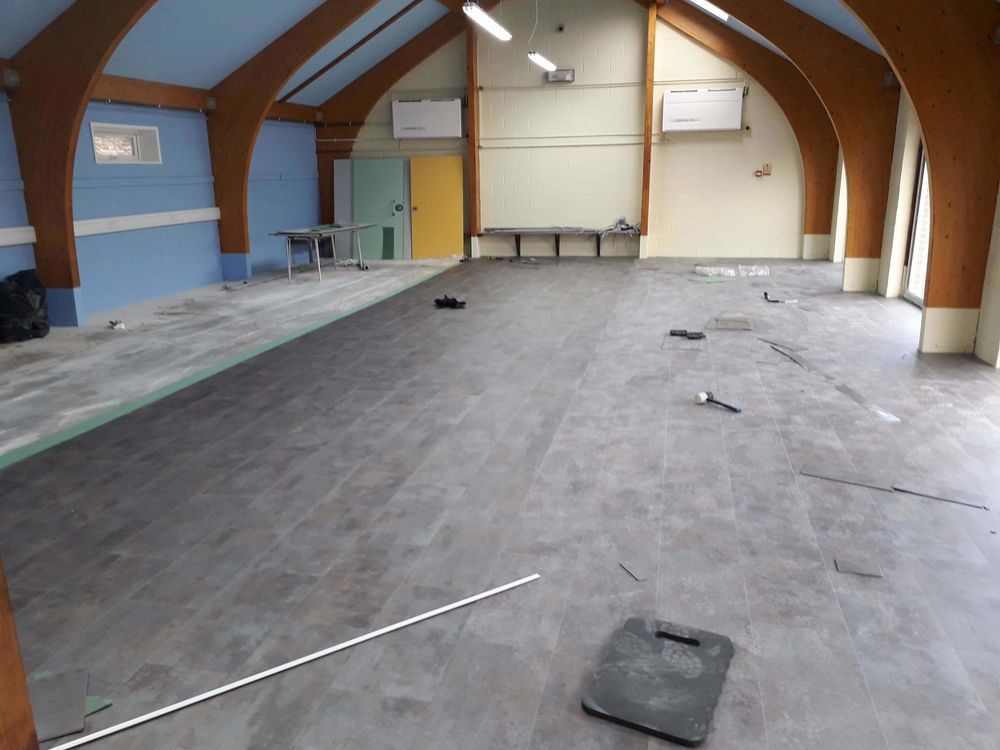
I arrive with the material, check the subfloor, apply levelling compound where needed, let it cure, and then fit. I cut around architrave, pipe collars, and door frames properly — not just a gap with a trim to hide the gap.
A typical ground floor — kitchen, hall, and dining area, perhaps 35 square metres (38 square yards) — takes a full day. A whole-house job across two or three floors takes two to three days. I'll tell you the honest timing before I start, not after.
If you'd like a rough sense of costs before we speak, the flooring cost calculator at HowMuchDoINeed.co gives you a ballpark based on floor area.
FAQs: LVT Fitting in Runwell, SS11
Q: Can you fit LVT over existing floor tiles? A: Sometimes, yes — if the tiles are fully adhered, flat, and the extra height is acceptable under door thresholds. If any are loose or cracked, they'll need to come up first. I'll assess on the visit.
Q: How long does LVT take to fit in an average Runwell home? A: One day for a ground floor, two to three days for a full-house job. I'll confirm the timeline once I've seen the rooms.
Q: Do I need underlay with LVT? A: Some LVT has pre-attached underlay; some doesn't. On a concrete subfloor, a 1.5mm acoustic underlay adds warmth and softens footfall — usually worth adding. I'll advise based on your product and your subfloor.
Q: Will LVT work with my underfloor heating? A: Yes, provided the LVT is rated for UFH use (most modern products are) and it's fully adhered rather than floating. Always confirm the product spec with the manufacturer before buying.
Q: How do I get started? A: WhatsApp me at https://wa.me/447966350111. Tell me your postcode, the rooms you're thinking about, and roughly when you'd want the work done. I'll come and have a look — no hard sell, just a conversation.
Frequently asked questions
Can you fit LVT over existing floor tiles in a Runwell home?
Sometimes, yes — if the tiles are fully adhered, flat, and the extra height is acceptable in doorways. If any are loose or cracked, they need to come up first. I'll assess this on the visit.
How long does LVT take to fit in an average Runwell SS11 property?
One day for a ground floor; two to three days for a full-house job. I'll confirm the timing once I've seen the rooms.
Do I need underlay under LVT on a concrete subfloor?
Some LVT has pre-attached underlay; some doesn't. On a concrete subfloor, a 1.5mm acoustic underlay adds warmth and reduces footfall noise. I'll advise based on your product and existing subfloor.
Will LVT work with underfloor heating?
Yes — provided the LVT is rated for UFH use (most modern products are) and it's fully adhered rather than floating. Always confirm the spec with the manufacturer before purchasing.
How do I book Graham for an LVT fitting in Runwell?
WhatsApp on https://wa.me/447966350111. Tell me your postcode, the rooms involved, and when you're thinking. I'll come and have a look.
Want a hand with your floors?
Message Graham on WhatsApp with a few details about your rooms and what you’re after.
More flooring guides
LVT Fitter in South Woodham Ferrers CM3 — What Your Floors Actually Need Before I Arrive
Graham Holmes walks through LVT fitting in South Woodham Ferrers CM3 — from concrete subfloor prep to finished plank, and what to expect from the area's different property types.
Wood FloorsEngineered Wood Floor Fitter Hullbridge SS5 — What Actually Goes Into the Job
Thinking about engineered wood flooring in Hullbridge? Graham Holmes — Essex floor fitter since 1982 — explains what the job actually involves, from subfloor prep to the final board.
LaminateLaminate Floor Fitter in Wickford SS11 — What to Expect (and What Most People Get Wrong)
Laminate flooring in Wickford done properly — what the prep involves, how to choose the right thickness, and what actually affects the price in the SS11 area.