LVT vs Laminate Flooring: Which One Should You Actually Fit?
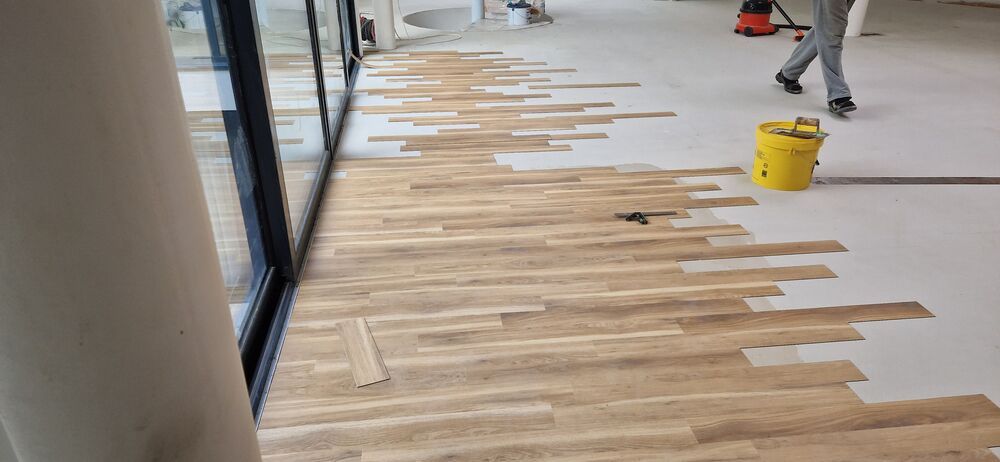
Every week someone in Essex asks me the same thing: "Graham, should I go LVT or laminate?" It's a fair question. From across the room they can look like cousins. On the floor, under your feet, day in day out, they behave like very different animals. Here's the honest version — the one I'd give you stood in your hallway with a brew going cold.
What they actually are
Laminate is a photo of wood printed onto a fibreboard core, sealed under a hard wear layer. It's clever stuff and it has come a long way, but at its heart it is a dense cardboard sandwich pretending to be oak.
LVT (luxury vinyl tile) is a plastic-based plank or tile — flexible, warmer underfoot, and genuinely waterproof. It costs a bit more, and in most homes it earns that difference back.
Where LVT wins
- Water. Kitchens, bathrooms, utility rooms, back doors where wet dogs come in — LVT shrugs it off. Laminate hates standing water; get it wet at the joints and the core swells like a sponge.
- Underfoot feel. LVT is warmer and quieter. Laminate can sound a touch hollow and clicky unless the subfloor and underlay are spot on.
- Repairs. Damage one LVT plank and a good fitter can lift and swap it. Laminate usually means unclicking half the room.
Where laminate still earns its keep
- Price. For a bedroom or a spare room that stays dry, a quality laminate gives you a wood look for less.
- Scratch resistance. A high-AC-rated laminate is tough as old boots against claws and grit — handy with big dogs.
The bit most people get wrong
Both of these floors are only ever as good as the subfloor under them. I've been called out to "faulty" floors more times than I can count, and nine times out of ten the floor is fine — the subfloor was never levelled properly. A dip of even 3mm over a couple of feet (600mm) and you'll feel the bounce and hear the click. If your base needs sorting, latex screed levelling is the fix, and it's worth every penny.
If you want to sanity-check how much material your room needs before you buy, the sister site has a straightforward flooring calculator and a flooring cost calculator that'll get you in the right ballpark.
So which one?
Quick rule of thumb I give people: wet or busy, go LVT. Dry and on a budget, laminate is grand. But the real answer depends on the room, the traffic and the subfloor — which is exactly the sort of thing worth a quick chat about before you spend money.
If you're anywhere across Essex and want it fitted properly the first time, WhatsApp me with a couple of photos of the room and I'll tell you straight what I'd do.
Frequently asked questions
Is LVT really waterproof?
A quality LVT is waterproof through the plank, so spills and mopping are no problem. The one thing to watch is water getting under the edges over time in a very wet room — a proper fit with the right perimeter detail sorts that.
Can I lay laminate or LVT over my existing floor?
Sometimes. Over a sound, level, hard subfloor — often yes. Over an old bouncy or uneven floor, no. It needs checking and usually levelling first, or you'll feel every lump.
Which lasts longer, LVT or laminate?
In a busy or damp room, LVT will normally outlast laminate because moisture is what kills laminate. In a dry room, a good high-grade laminate can last many years too.
Do I need underlay?
Most laminate needs a proper underlay for feel and sound. Some LVT is a click system that wants underlay, some is glue-down that does not. The subfloor decides — get it checked first.
Want a hand with your floors?
Message Graham on WhatsApp with a few details about your rooms and what you’re after.
More flooring guides
LVT Fitter in South Woodham Ferrers CM3 — What Your Floors Actually Need Before I Arrive
Graham Holmes walks through LVT fitting in South Woodham Ferrers CM3 — from concrete subfloor prep to finished plank, and what to expect from the area's different property types.
Wood FloorsEngineered Wood Floor Fitter Hullbridge SS5 — What Actually Goes Into the Job
Thinking about engineered wood flooring in Hullbridge? Graham Holmes — Essex floor fitter since 1982 — explains what the job actually involves, from subfloor prep to the final board.
LaminateLaminate Floor Fitter in Wickford SS11 — What to Expect (and What Most People Get Wrong)
Laminate flooring in Wickford done properly — what the prep involves, how to choose the right thickness, and what actually affects the price in the SS11 area.