Which flooring type is best? LVT, Laminate, Real Wood. After 40 years my answer is this!
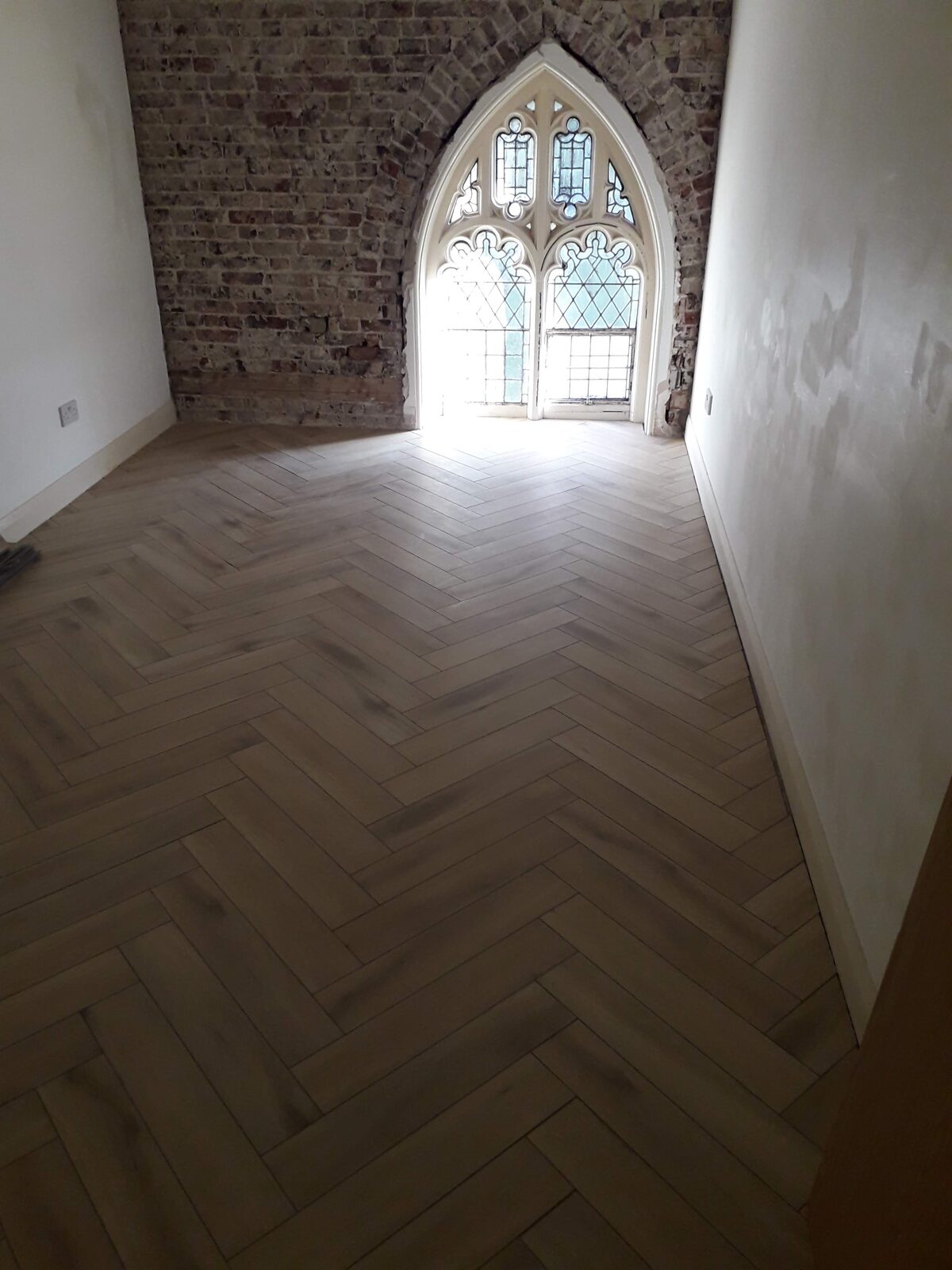
After 40-odd years on my knees fitting floors, the question I get more than any other is a simple one: "Graham, which flooring type is best?" And the honest answer is — it depends on the room, the traffic and your budget. But there are some hard truths about each type that the showrooms won't always tell you. Here's the straight version I'd give you stood in your hallway with a brew going cold.
The four contenders
Most of what I fit falls into four camps:
- LVT stick down — luxury vinyl planks glued flat to a properly prepared subfloor.
- LVT click (floating) — the same vinyl look, but planks that click together and float over an underlay.
- Laminate — a photo of wood printed onto a fibreboard core, sealed under a wear layer.
- Real wood — engineered or solid timber, the genuine article.
They can look like cousins in the showroom. Under your feet, day in day out, they behave like very different animals. Here's how they stack up side by side — the same chart I hand my customers.
The flooring comparison chart
| Property / Feature | LVT Stick Down⭐ Recommended | LVT ClickFloating | LaminateWatch out | Real WoodLuxury Classic |
|---|---|---|---|---|
| 100% Waterproof | ✓100% Waterproof | ✓100% Waterproof | ✕Not waterproof | ✕Vulnerable to water |
| Warm underfoot feel | ✓Warm & comfortable | ✓Warm & comfortable | ✕Cold & hard | ✓Naturally warm |
| Solid sound (no hollow noise) | ✓Solid, silent feel | !Slight hollow noise | ✕Very hollow drumming | ✓Solid timber acoustic |
| Bathrooms & kitchens | ✓Ideal (100% sealed) | ✓Suitable | ✕Unsuitable | ✕Not recommended |
| Underfloor heating suitable | ✓Excellent transfer | ✓Good transfer | !Limited efficiency | ✓Suitable (Engineered) |
| Individual plank replacement | ✓Easy single plank | !Manageable (unclicking) | ✕Major job — lifts floor | ✓Possible (spot sand) |
| Scratch & chip resistant | ✓Heavy wear layer | ✓Durable surface | ✕Chips easily at edges | !Can be sanded |
| Moisture & damp resistant | ✓Fully impervious | ✓Resistant | ✕Swells, warps, bubbles | !Vulnerable to damp |
| Stays flat over time | ✓Bonded to subfloor | !Can shift in traffic | ✕Lifts & gaps appear | !Moves with humidity |
| Long lifespan | ✓20–25 years | ✓15–20 years | ✕5–10 years | ✓25–50 years (with care) |
| Adds property value | ✓Strong buyer appeal | !Modest appeal | ✕No added value | ✓Premium value asset |
| Fitting recommendation | ✓Pro fitting essential | !DIY possible | !DIY possible | ✓Pro fitting required |
| Realistic look & feel | ✓Excellent texture | ✓Excellent realism | !Good print layer | ✓100% Natural wood |
| Low maintenance | ✓Simple sweep & mop | ✓Simple sweep & mop | !Careful cleaning needed | ✕High maintenance |
Scroll the chart sideways on a phone to see every column. A tick means it's a genuine strength, a cross means it's a real weakness, and an exclamation mark means "fine, with a caveat".
Why I steer most people to stick-down LVT
For the average busy family home, stick-down LVT wins on the balance of everything: waterproof, warm, silent, stable, repairable and long-lasting. Because each plank is bonded to a flat subfloor, it never shifts, clicks or gaps. It's the floor I fit the most and for good reason.
Laminate has its place — a dry bedroom on a tight budget — but I'll always be straight with you: it's the floor most likely to disappoint you within a few years.
Thinking of herringbone or a patterned floor? Read this first
Herringbone and chevron patterns look stunning and everyone's after them right now. But here's the bit nobody tells you before you buy: the material you choose makes a massive difference to the cost of a pattern, because of wastage.
- ✕Locked to one direction: the tongue & groove means each plank can only be fitted one way — it cannot be turned around or flipped.
- ✕Needs matched “A” & “B” planks: a herringbone needs dedicated left and right boards to form each leg of the pattern.
- ✕Offcuts are wasted: because a cut piece won’t lock into the next position, most offcuts are unusable and thrown away.
- ✕Buy far more than the room needs: this creates a large amount of wastage — often significantly more material than the floor area alone.
- ✕Higher cost, sometimes dramatically: more waste means a noticeably bigger material bill for a patterned floor.
- ✕Slower, more complex fitting: adds to the labour time and cost on top of the wasted material.
- ✓No fixed direction: glue-down planks aren’t locked by a tongue & groove — each board can be laid whichever way the pattern needs.
- ✓Offcuts get reused: a cut piece can be used elsewhere in the pattern instead of being binned — very little goes to waste.
- ✓Much lower material bill: far less wastage means a patterned floor costs considerably less in materials than the tongue & groove equivalent.
- ✓Cleaner, tighter pattern: planks bond flat with precise, consistent joins for a flawless finish.
- ✓Perfect for every pattern: ideal for herringbone, chevron, brick-bond and other designs.
- ✓Rock-solid underfoot: bonded to the subfloor — no hollow sound, no lifting, no shifting.
So if you've got your heart set on herringbone, glue-down LVT is almost always the smarter choice. You get the exact look with far less money thrown in the skip.
The bit most people get wrong
Whatever you choose, a floor is only ever as good as the subfloor under it. I've been called to "faulty" floors more times than I can count, and nine times out of ten the floor is fine — the base was never levelled properly. A dip of even 3mm over 600mm (a couple of feet) and you'll feel the bounce and hear the click. If your base needs sorting, latex screed levelling is the fix, and it's worth every penny.
If you want to sanity-check what a floor might cost before you commit, the sister site has a handy flooring cost calculator and a flooring calculator to get you in the right ballpark.
So, which one?
Quick rule of thumb: wet or busy, go stick-down LVT. Dry and on a budget, laminate will do. Want the real thing and happy to maintain it, real wood. And if it's a pattern like herringbone, glue-down LVT will nearly always save you money.
If you want it fitted properly the first time, WhatsApp me with a couple of photos of the room and I'll tell you straight what I'd do.
Frequently asked questions
Is stick-down LVT better than click LVT?
For most homes, yes. Stick-down is bonded flat to the subfloor so it feels solid and silent, never shifts or gaps, and a single damaged plank can be swapped out. Click LVT is quicker to fit and still waterproof, but it floats, so it can have a slight hollow note and is less stable over many years.
Why is laminate so much cheaper — what is the catch?
The low price is the upfront material cost. The catch is lifespan and water: laminate typically lasts 5–10 years, sounds hollow underfoot, and its fibreboard core swells if it gets wet at the joints. In a dry, low-traffic room it can be great value; in a kitchen, bathroom or busy family home it usually costs you again sooner than you would like.
Is a herringbone floor more expensive to fit?
It can be, and a big part of that is wastage. With tongue-and-groove laminate or click, planks only fit one way so most offcuts are unusable and you buy far more than the room area. With glue-down LVT there is no locking direction, so offcuts get reused and the material bill comes out considerably lower for the same pattern.
What flooring is best for a kitchen or bathroom?
LVT, every time — it is 100% waterproof, warm underfoot and easy to keep clean. Laminate and real wood are both risky around water and I would steer you away from them in any room that gets wet.
Does the subfloor really make that much difference?
Massively. Most "faulty floor" call-outs I get are actually a subfloor that was never levelled properly. A dip of just 3mm over 600mm gives you bounce and click. Getting the base flat with latex screed before fitting is what buys you a floor that lasts.
Want a hand with your floors?
Message Graham on WhatsApp with a few details about your rooms and what you’re after.
More flooring guides
Engineered Wood Floor Fitter Chelmsford — You Want It Done Once, Not Twice
Engineered wood flooring is one of the most satisfying things to get right — and one of the most expensive things to get wrong. If you're in Chelmsford or nearby, here's what fitting it properly actually looks like.
CarpetCarpet Fitter Basildon: What to Expect When You Book the Right One
Booking a carpet fitter in Basildon is easier when you know what to look for. Here's what 40-odd years of fitting floors in Essex has taught me.
Subfloors & ScreedHow to Prep a Subfloor for LVT — Don't Skip This Bit, Mate
Before you lay a single LVT plank, the subfloor needs to be right. Graham Holmes, Essex floor fitter since 1982, walks you through every step — from moisture checks to self-levelling compound.